
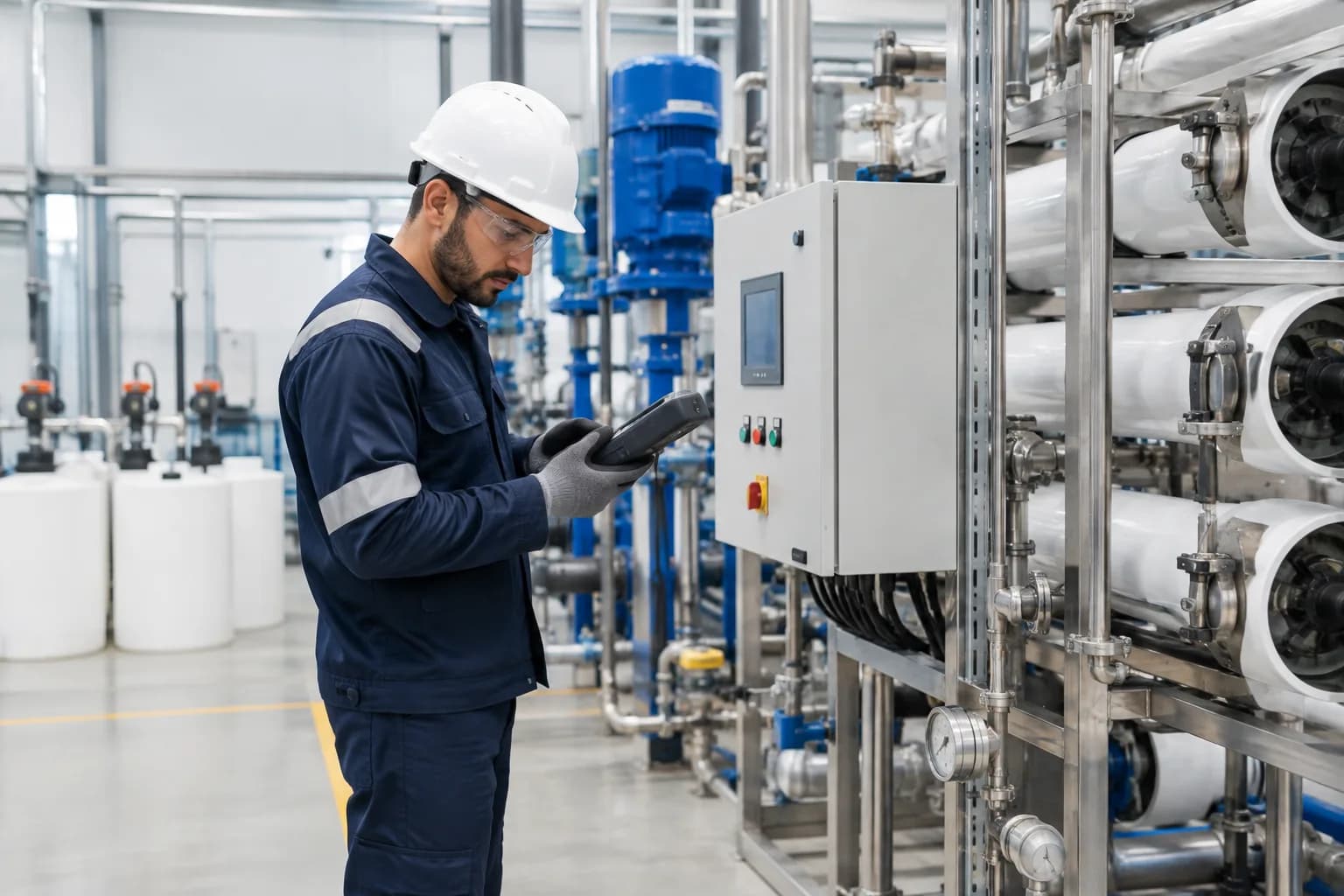
How do modern water treatment systems make water safe and fit for use?
Modern water treatment systems combine physical separation, chemical conditioning, biological processes where wastewater is involved, and disinfection to remove contaminants or control them to the level required by the intended use. The correct treatment train depends on the source water, required water quality, process risk, discharge or reuse objectives, and the facility’s ability to operate and maintain the equipment reliably.
Why water treatment matters
Water is rarely suitable for every purpose in its untreated state. Surface water can carry suspended solids, microorganisms and organic matter. Groundwater may contain dissolved minerals, gases or metals. Seawater has a high dissolved-salt content, while industrial water may acquire oils, chemicals, solids or heat during use.
Water treatment therefore serves three connected purposes:
- Public and occupational health: Drinking-water systems must control microorganisms and other contaminants so supplied water is safe for its intended human use.
- Reliable industrial operation: Boilers, cooling systems, membranes, heat exchangers and production equipment need water with controlled characteristics to limit scale, corrosion, fouling and product contamination.
- Environmental protection and resource management: Wastewater treatment reduces the impact of discharges and can produce water suitable for reuse, reducing withdrawals from fresh-water sources.
In water-scarce regions, including much of the Gulf, treatment is also a strategic utility function. Desalination, wastewater reuse, leakage control and efficient industrial water management can reduce pressure on limited freshwater resources. Quality requirements should be based on applicable local regulations, recognised water-quality guidance, the intended end use and the sensitivity of downstream assets.
The basic treatment train
A treatment plant is not simply a collection of individual technologies. It is a sequence in which each stage protects or improves the performance of the next. The exact arrangement changes with raw-water quality and the required product water, but the following stages form a useful general model.
Screening and pre-treatment
Screening removes larger debris such as leaves, plastics, rags and other material that could block pumps, channels, valves or downstream equipment. Grit removal may follow where sand and dense mineral particles are present. In industrial systems, pre-treatment can also include oil-water separation, pH adjustment, equalisation tanks or cartridge filtration.
The operational objective is simple: protect equipment and make influent conditions more stable. Poor screening and inadequate housekeeping often create avoidable pump blockages, inconsistent flow and excessive maintenance work downstream.
Coagulation and flocculation
Very fine particles can remain suspended because they do not settle readily. During coagulation, a selected chemical is rapidly mixed into the water to destabilise these particles. During flocculation, gentler mixing encourages particles to collide and form larger, settleable aggregates known as flocs.
Performance depends on factors such as raw-water turbidity, pH, temperature, alkalinity, chemical dose and mixing energy. Operators should avoid treating chemical dose as a fixed setting. Routine jar testing or a similarly controlled optimisation method helps teams respond to changing raw-water conditions without excessive chemical use or poor clarification.
Sedimentation and clarification
Sedimentation separates heavier flocs by allowing them to settle in a clarifier or settling basin. Clarified water leaves near the surface, while accumulated sludge is removed from the bottom for thickening, dewatering, further treatment or disposal.
A stable sludge blanket, even inlet distribution and effective sludge removal are central to reliable clarification. Carryover of solids can overload filters and, in membrane plants, rapidly increase fouling. Visual checks, turbidity trends and sludge-management discipline are as important as the mechanical condition of scrapers, pumps and valves.
Filtration
Filtration removes remaining suspended material after clarification or serves as a primary polishing step in simpler systems. Common media include sand, dual-media beds and multimedia filters. Filter performance is assessed through measures such as treated-water turbidity, head loss, run length and backwash effectiveness.
Filters need an appropriate backwash sequence and adequate wash-water flow to release retained solids without damaging media or losing excessive media to drain. Filter-to-waste arrangements, where used, should be managed carefully after backwashing or plant upset conditions.
Disinfection
Disinfection inactivates or controls pathogenic microorganisms. Chemical disinfectants, ultraviolet (UV) systems and, in some applications, ozone are used according to the water source and distribution or process needs. A chemical disinfectant may provide a residual that helps protect water after treatment, whereas UV provides treatment at the point of exposure but does not create a lasting residual.
Disinfection works best when upstream treatment has already reduced turbidity and particle loading. Particles can shield microorganisms and consume disinfectant, so a sound multi-barrier process is more dependable than relying on one final stage alone.
Technologies used in modern water treatment systems
The technologies below are often combined rather than used as alternatives. Selection should follow a clear understanding of feed-water analysis, variability, product-water requirements, waste streams, site constraints and lifecycle cost.
| Technology | Main function | Typical operational consideration |
|---|---|---|
| Ultrafiltration (UF) | Removes fine suspended solids and many microorganisms | Requires controlled backwashing and membrane-cleaning management |
| Reverse osmosis (RO) | Reduces dissolved salts and many dissolved contaminants | Sensitive to scaling, fouling, pressure control and concentrate disposal |
| Ion exchange | Removes or exchanges selected dissolved ions | Resin regeneration and chemical handling require close control |
| Activated carbon | Adsorbs selected organic compounds, tastes, odours and residual oxidants | Media exhaustion and biological growth need monitoring |
| UV disinfection | Inactivates microorganisms using ultraviolet light | UV transmittance, lamp condition and sleeve cleanliness affect performance |
| Chemical disinfection | Controls microorganisms using an approved chemical disinfectant | Dose, contact conditions and residual management are important |
Membranes, reverse osmosis and ultrafiltration
Membrane treatment separates contaminants through a semi-permeable barrier. Ultrafiltration is commonly used to reduce particulate matter and microorganisms and can provide a robust barrier ahead of downstream treatment. Reverse osmosis uses pressure to separate water from dissolved salts and is widely applied for brackish water, seawater desalination, high-purity process water and reuse applications.
Membranes require disciplined pre-treatment. Suspended solids, biological growth, mineral precipitation and oils can foul membrane surfaces, reducing permeate flow and increasing differential pressure or energy demand. A practical programme includes feed monitoring, correct chemical dosing, scheduled clean-in-place activity based on performance data, membrane integrity checks where relevant, and investigation of any sudden trend change rather than simply increasing pressure.
Desalination
Desalination converts saline or brackish water into water suitable for defined uses. Reverse osmosis is a common approach, although thermal processes also exist. A desalination facility requires more than a membrane skid: intake quality, pre-treatment, energy supply, product-water conditioning, corrosion control and concentrate management must all be considered together.
For coastal Gulf facilities, seawater temperature, seasonal biological activity and high salinity can influence operating conditions. Recovery targets should be balanced against scaling risk, membrane life, energy use and the acceptable management route for concentrate.
Ion exchange and activated carbon
Ion exchange uses resin beds to remove or replace particular ions. It is used in softening, demineralisation and polishing duties, including treatment upstream of sensitive boiler systems. Resin condition, regeneration quality, rinse performance and conductivity trends help determine whether the unit is producing the expected water quality.
Activated carbon is commonly used to remove certain dissolved organic compounds, taste- and odour-causing substances, or residual oxidants that could damage downstream membranes. Carbon beds require suitable hydraulic design and monitoring because exhausted media can lose adsorption performance and may support biological growth if not managed appropriately.
Industrial water applications
Industrial treatment objectives are defined by equipment and process risk, not by a generic idea of “clean” water.
Boiler feed water
Boiler feed water requires tight control because impurities can cause scale, corrosion, deposits and steam-quality problems. Typical treatment may include clarification or filtration, softening, demineralisation, reverse osmosis, deaeration and carefully managed internal boiler chemistry. The appropriate train depends on boiler design, pressure, make-up-water quality and condensate return conditions.
Sampling discipline matters as much as treatment equipment. Teams should use representative sample points, maintain analysers, investigate abnormal conductivity or chemistry trends promptly, and keep make-up, condensate and boiler-water controls aligned. Staff responsible for this duty benefit from practical knowledge of steam systems and boiler operations alongside water chemistry.
Cooling water
Cooling towers and open recirculating cooling systems concentrate dissolved solids as water evaporates. Without control, scale, corrosion, deposition and microbiological growth can reduce heat-transfer performance and threaten equipment reliability. Typical controls include side-stream filtration, chemical treatment, blowdown management, monitoring of cycles of concentration and routine inspection.
Effective cooling-water programmes join chemistry with mechanical and operational controls: clean basins, functional dosing equipment, appropriate flow, well-maintained drift eliminators and documented response to abnormal microbiological or corrosion indicators. Industrial cooling water systems training is particularly relevant where operations and maintenance teams share responsibility for these controls.
Process and high-purity water
Food, pharmaceutical, electronics, chemical, mining and manufacturing operations may require water that meets a specific process specification. The relevant parameters may include dissolved salts, hardness, organic content, particulate levels, microbial quality, pH or temperature. The right approach is to translate each process requirement into measurable water-quality parameters, set sampling locations and define action limits internally with the process owner.
Wastewater treatment and water reuse
Wastewater treatment is designed around the contaminants generated by a site and the intended destination of the treated water. Municipal wastewater commonly requires preliminary treatment, primary solids removal, biological treatment and final clarification, followed by disinfection or additional polishing where required. Industrial wastewater may first need equalisation, pH correction, oil separation, chemical precipitation or treatment of specific process contaminants before biological treatment is feasible.
Biological systems use microorganisms to convert biodegradable material into more stable forms. Their performance depends on stable loading, oxygen supply where required, suitable nutrient balance, solids control and avoidance of toxic shocks. Operators should monitor influent changes closely; an unannounced process chemical or batch discharge can upset a biological plant well before the final effluent result reveals the problem.
Water reuse can be valuable for irrigation, cooling-tower make-up, washdown, construction or selected industrial duties, subject to applicable requirements and a risk assessment for the intended use. Reuse systems need clear pipe identification, cross-connection control, fit-for-purpose treatment and ongoing verification. Reuse water should not be assumed suitable for every purpose simply because it appears clear.
Plant teams seeking a broader operational view can use water and wastewater treatment plant operations training to strengthen the connection between process control, equipment care and compliance responsibilities.
Monitoring water quality and process control
A sound monitoring plan combines online instruments, laboratory testing, operator observation and trend review. Typical online measurements may include flow, pressure, level, pH, conductivity, turbidity, dissolved oxygen, oxidation-reduction potential and residual disinfectant, depending on the process.
Good control depends on trustworthy measurements. Establish routines for calibration, cleaning, verification against grab samples, alarm testing and documentation. Sensors exposed to dirty water, chemical solutions or scaling conditions can drift or foul; an automated value should not replace informed operator checks.
Useful control practices include:
- Trend key parameters rather than reviewing isolated readings.
- Link flow, pressure and quality trends to identify fouling, leaks, bypassing or dose problems early.
- Define who can change set points, chemical doses and alarm limits.
- Maintain sampling plans that cover raw water, intermediate stages, final water and critical return streams.
- Keep operating logs detailed enough for shift teams to understand what changed and why.
Automation can improve consistency, but it must reflect actual process knowledge. Clear cause-and-effect logic, maintained instruments and competent response to alarms are essential. These capabilities are supported by industrial automation and control systems training where water facilities rely on PLC, SCADA or integrated control platforms.
Chemical handling and safety
Coagulants, acids, alkalis, oxidants, biocides, antiscalants and cleaning chemicals are integral to many plants, but they introduce hazards. Safe operation requires current safety data, compatible storage arrangements, secondary containment where appropriate, ventilation, labelling, controlled access and emergency response arrangements suited to the chemicals on site.
Operators should verify dosing lines, injection quills, pumps and non-return devices before transferring or dosing chemicals. Incompatible chemicals must never be mixed, and chemical transfers should follow written procedures using the required personal protective equipment. Eyewash and emergency shower facilities, spill-control materials and communication arrangements should be accessible and maintained. HSE reviews should also consider confined-space, electrical, lifting and slip hazards around tanks, channels and wet process areas.
Operation and maintenance best practices
Reliable water treatment is achieved through routine discipline rather than response to failures alone. A practical programme should include:
- Standard operating procedures for start-up, shutdown, normal operation and abnormal conditions.
- Preventive maintenance for pumps, blowers, mixers, valves, filters, instruments and dosing systems.
- Critical spares for equipment whose failure would interrupt treatment or create an environmental risk.
- Inspection of tanks, pipework and structures for leaks, corrosion, coating failure and biological deposits.
- Chemical inventory management and verification of delivered chemical strength.
- Performance reviews using energy, chemical consumption, water recovery, quality and downtime trends.
Asset records should connect maintenance actions to process performance. For example, repeated filter problems may be linked to upstream clarification, while frequent pump seal failures may indicate solids carryover, dry running or unsuitable operating conditions. This evidence-based approach helps managers prioritise corrective work rather than repeatedly treating symptoms.
Common operational challenges
Many water-treatment upsets have recognisable causes. Treating them systematically reduces unnecessary chemical use, energy consumption and equipment stress.
| Challenge | Likely contributing factors | Practical response |
|---|---|---|
| High final-water turbidity | Poor coagulation, solids carryover, damaged filters or ineffective backwash | Check raw-water change, run controlled dose tests, inspect clarifier and filter performance |
| Membrane fouling or scaling | Inadequate pre-treatment, dose error, feed change or delayed cleaning | Review feed trends, pretreatment and cleaning triggers; confirm chemistry before increasing pressure |
| Unstable disinfection residual | Variable demand, poor mixing, analyser error or short contact time | Verify analyser and dosing system, review upstream quality and contact conditions |
| Corrosion or deposits | Uncontrolled chemistry, oxygen entry, poor material selection or stagnant areas | Review water chemistry, inspection findings and operating conditions together |
| High energy use | Excess pressure, fouled equipment, poor pump control or unnecessary recirculation | Compare current performance with baseline trends and investigate the largest losses first |
Energy efficiency and sustainability
Treatment must deliver required quality reliably, but efficiency decisions should consider the whole system rather than one piece of equipment. A lower chemical dose that causes poor clarification may increase membrane cleaning and waste production. A higher recovery target may reduce intake volume but increase scaling risk and energy demand. Good decisions use process data and lifecycle thinking.
Priority opportunities often include optimising pump operation, reducing pressure losses, maintaining membranes and heat-transfer surfaces, recovering and reusing water where safe, improving backwash management, preventing leakage and matching treatment intensity to the end use. Energy monitoring should distinguish major loads such as high-pressure pumps, aeration blowers, transfer pumps and auxiliary systems.
For facilities in water-scarce areas, a water balance is an especially useful management tool. It maps source water, process use, losses, wastewater, reuse opportunities and discharge points. Combined with a quality map, it helps identify where lower-grade reclaimed water can safely replace higher-quality water without compromising health, equipment or product requirements.
Building a capable operating team
Modern plants combine chemistry, mechanics, instrumentation, automation and safe work practices. Managers should define competency requirements by role: operators need to understand the process and routine checks; maintenance teams need asset-specific failure knowledge; supervisors need to interpret trends, manage change and make risk-based decisions.
Practical, scenario-based development is valuable when it is linked to the plant’s actual treatment train, operating procedures and recurring problems. Relevant technical development may include industrial water treatment systems training for teams responsible for treatment performance and reliability.
A well-managed water treatment system is one in which the intended water quality, operational limits, monitoring plan, maintenance strategy and safety controls are understood together. That integrated view supports dependable service, protects downstream equipment and makes efficient reuse possible.
- water treatment
- wastewater treatment
- reverse osmosis
- industrial utilities
- water reuse
- plant operations
- water quality
Frequently Asked Questions
- How should a facility select a suitable water treatment technology?
- Start with representative source-water analysis and its expected variability, then define the required water quality for the end use and the associated process risks. Assess waste streams, chemical needs, energy, space and the team’s ability to operate and maintain the system; a technology should be selected as part of a complete treatment train.
- What is the difference between ultrafiltration and reverse osmosis?
- Ultrafiltration mainly removes fine suspended matter and many microorganisms, so it is often used as a robust barrier or pre-treatment step. Reverse osmosis removes a large proportion of dissolved salts and other dissolved contaminants, but requires higher pressure and closer control of scaling, fouling and concentrate.
- Why do reverse osmosis membranes foul quickly?
- Rapid fouling can result from inadequate pre-treatment, suspended solids, biological growth, mineral precipitation, oils or incorrect chemical dosing. Review feed-water quality, pressure and flow trends, and verify pre-treatment and cleaning practice before increasing operating pressure.
- Can treated wastewater be used in cooling towers?
- It can be used in some cases when it meets the required use specification and site risk assessment. Dissolved salts, turbidity, microorganisms and constituents that could cause scale, corrosion or biological growth must be controlled, and unsafe cross-connections must be prevented.
- Which measurements are most important in a water treatment plant?
- The right measurements depend on the process, but flow, pressure, level, pH, conductivity, turbidity and disinfectant residual are common. Biological processes may need dissolved-oxygen monitoring, while membrane systems require attention to differential pressure, production flow and feed and product-water quality.